Search Results
Search this site
106 results found with an empty search
- Dawes Twine Works “through an older eye”©
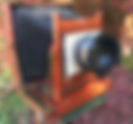
Dawes Twine Works in West Coker, Somerset is a heritage site for industrial archeology, preserving the story, buildings and artefacts of the twine-making industry. It is Britain’s only surviving Victorian twineworks with its original working machinery. Saved from total collapse and now restored by local volunteers for everyone to enjoy. I was made very welcome on my visit and the refreshments were excellent! Now run by the Coker Rope & Sail Trust and CIO, this fascinating site is open Monthly, every fourth Saturday. The website for the village of West Coker contains a wealth of information about the works’ history as well as current activities and events. I visited in late June 2022 with my cameras from the early 1900s: A 1900 full-plate Thornton Pickard Imperial using sheet film (1st picture on the left) A 1910, half-plate Thomas Sanderson using vintage (1950s) glass plates (1st picture on the right) A 1904, 3D-Stereoscopic Blair Hawkeye No3 using sheet film (2nd picture) Photographically, the day was challenging. Being a bright sunny day scenes inside the sheds were high contrast. Dark interiors and very bright windows/doorways. In fact the interiors were so dark it was hard to see clearly to focus properly using the ground glass screens of the plate cameras. On my next visit I will come with an LED floodlight for focussing. It was great to have the engines running to be able to capture their motion with the long exposures needed for such dark conditions. This 3D Stereoscopic pair of images (cross-view) shows the main engine. Built by Alexander Shanks & Sons Ltd (Arbroath & London) in 1927. More images can be seen here.
- 3D stereoscopic images - a journey of discovery
#Stereoscopic images when viewed correctly create the illusion of depth and can be quite startling in their effect. From a small boy, I have always loved these images spending hours in my primary school viewing images from around the world and getting lost in them. It has been, therefore, a natural progression from my work with antique cameras and processes to explore the world of 3D image making and viewing using not dissimilar cameras. However the price of a reasonable antique example is high - and getting higher following the trend of a growing interest in the field. So I set about making my own - adapting my largest field camera - a 10x8" 'New Countess' from c1890. The first problem was finding two identical lenses. I solved this by taking the objective lenses from an old pair of binoculars. With a focal length of about 4" these were to work quite well. The second problem was making a divider or "septum" to keep the two images separate from one another on the film/plate. A sliding black-paper arrangement worked out well. The third problem was to make a shutter arrangement of suitable speed. For the X-Ray film I use (ISO100) this would be approx 1/30s. However using photographic paper as film with its much slower speed (ISO4-6) allowed me to use a method of covering and uncovering the lenses for several seconds. To achieve the 1/30s speed I employed a strip of wood with two equally sized slots in that could pass behind the lenses and expose the film. Add an elastic band gave the arrangement the necessary speed.
- Pictorialist Tulip
Having discovered by accident the effect seen here, I set out to reproduce it in order to create this image. Starting with a #largeformat #Xrayfilm negative of the #tulip I made a contact print onto #cyanotype in gelatine brushed onto watercolour paper. This cyanotype paper had been made several months ago and stored and had, I had thought, been spoiled - already gone blue on its own. However testing showed it could still produce a good image out in the sun for 15 minutes. I developed in a 1% citric acid bath, then oxidised in dilute hydrogen peroxide. This produced some small bubbles with start to lift the gelatine. I then bleached in washing soda which produced larger bubbles and a little more lifting before finally toning on black tea at which point the crazing effect becomes visible. The print is then washed thoroughly and carefully so as not to lift the gelatine too much. So far I have made 4 images in this way. All available to buy soon (Prices tbc). #XRaynegative #photooftheday #picoftheday #bestpic #beautiful #art #artwork #artists #wetplate, #collodion, #photography, #thorntonpickard, #largeformatphotography, #largeformatcameras, #analoguephotography, #diydeveloping, #papernegative, #vintagecamera, #largeformat, #darkroomprint, #blackandwhite, #studiothree_galler #Studiothree_Gallery #brass #antiquelens #artspacecreatives
- Camera in Clovelly
A visit to Clovelly gardens in North Devon was a great chance to use my Thornton Pickard Imperial - full plate camera from the 1900s. I was using 5x7" paper negatives in customised holders inside the double dark slides. Here is an image (toned in coffee) of the Summerhouse designed by Rex Whistler in the 1930s. - see more pictures here.
- Still learning – paper negatives
The sky looked promising for clouds above the old Birnbeck Pier, so I took my 1900s Thornton Pickard Imperial camera (Image size 8.5×6.5 inches) loaded with Ilford RC IV paper. So the first image here is an exposure of 3 seconds on F16. The paper behaving as ISO 2. I wanted to blur the motion of the estuary water as it rushed under the pier on the tide. To do this I thought I’d use a “stopper” ND1000 filter. I metered for the light through the filter and exposed accordingly. However the image came out very under exposed so the filter is dramatically stopping the UV/Blue light needed to darken the othorchromatic photographic paper. The image below uses a graduated ND filter, but shows some strange light leaks – this needs investigation!
- My Favourite Images
Here are my favourite images from past few weeks – some digital – some paper negatives, x-ray film etc.. It’s good to take time and look back over your work to see what really stands out – grabs you – I have done this a number of times. And each time I have weeded out a few images from my “Best images” folder. I have also looked back over images not in the “best” folder and promoted a few. Leaving a break from the editing process I find some images look better than at first I had thought. Sometimes – especially the colour images – they jar and I have to go back and tone things down or brighten them up as needs be. This slideshow requires JavaScript. #quarterplatekodabrome #antiquelens #largeformatphotography #10x8 #studiothreegaller #largeformat #StudiothreeGallery #FilmIsNotDead #brass #papernegative #blackandwhite #diydeveloping #vintagecamera #darkroomprint #largeformatcamerasanaloguephotography #tenbyeight
- Glass dry plate – poured emulsion
Self portrait- These are my first attempts at pouring liquid silver gelatine emulsion (Foma from Silverprint) onto a glass plate to make my own glass negatives. Some practice still needed – but some areas show very good detail and tones. 2 second exposure F45. Developed in standard Ilford chemistry at recommended dilutions. Photographed and inverted in Photoshop. Camera is a Lancaster Instantograph c1900. #lancaster #antiquelens #foma #glassplatenegative #studiothreegaller #largeformat #StudiothreeGallery #brass #papernegative #blackandwhite #diydeveloping #vintagecamera #darkroomprint #SelfportraitThisismyfirstattemptatpouringliquidsilvergelatineemulsionFomaontoaglassplatetomakemyownglassnegativesSomepracticestillneededbutsomeareasshowverygood #Instantograph #largeformatcamerasanaloguephotography #liquidemulsion
- My new book – Old Parson’s Fruit ‘n’ Veg
Old Parson’s Fruit ‘n’ Veg is the title, Fruit-‘n’-Veg through old glass – is the content of my new Blurb book. created at the suggestion of a friend who recommended I produce a book to show what I do. A celebration of the everyday – seen through the old eye of a 100-year-old plate camera. Each image has been created as a negative on a piece of photographic paper making the objects look quite different – yet familiar. Some have been “developed” to positive images in “Photoshop” where this helps highlight specific characteristics that intrigue me, or I find beautiful. It took a long time to look through the images produced in the last 15 months and select 90 of the best and most representative images. This slideshow requires JavaScript. #blurb
- Looking to the stars with an old eye
I love making star-trail images with my DSLR, but wanted to see what I could achieve with my 100 year old camera (Thornton Pickard Imperial 8.5×6.5)and 80 year old lens (Dallmeyer Pentac F11). Two nights ago I tried a paper negative exposed for 1 hr – but only a few of the brightest stars in Ursa major left any mark on the paper – even with the lens wide open at f2.9. So last night I used some Fomopan 100ISo film I had. Here is the result – which I am pretty pleased with. Enhanced and inverted to a positive in Photoshop I got this. This is what I get with my Fuji mirrorless cameras set to take an image for 15s every 30s for 190 minutes (until the battery runs out). #astrophotography #Photography #largeformatphotography #startrails #fomopan #analoguephotography #Astronomy
- A perfect marriage?
Pleased to have successfully “married” my Dallmeyer 8″ (f2.9-11) to a, recently acquired, Thornton Pickard Imperial (Full Plate). I have had to make a gravity shutter as the lens is too big for any of my TP roller shutters. This runs at 1/30s quite reliably. Photo is a paper negative at F 2.9 (developed in Photoshop). Using f2.9 the depth of field was very small. So small that a movement of 2mm on the paper negative put the focus out as compared to what is seen on the glass screen. The double dark slide which holds the paper negative has a divider with springs to push the negative (glass plate originally) flat. However on the paper it pushed the centre forward and out of the plane of focus – even with thick card backing the paper. So I removed the plate with springs and now the paper sits on the focal plane.
- Exploring old cameras
Having started with the Victorian bellows cameras I thought I’d explore some other old cameras and see if I could use them with paper negatives. I found that local general auctions often had collections of cameras for sale so started there. I started by seeing if/how they worked, cleaning them, and, if within my limited skill set, repairing them to a point where I can try them with film, x-ray film or paper negatives. When I have satisfied my curiosity I have sold them on and bought some more! Along the way I have saved a few to add to my collection – but only those which help produce images that I find interesting and/or beautiful. #gallery-1045-6 { margin: auto; } #gallery-1045-6 .gallery-item { float: left; margin-top: 10px; text-align: center; width: 25%; } #gallery-1045-6 img { border: 2px solid #cfcfcf; } #gallery-1045-6 .gallery-caption { margin-left: 0; } /* see gallery_shortcode() in wp-includes/media.php */
- So busy trying new things ……
I was surprised to see my last post was over 3 months ago. But I haven’t been idle – far from it, especially now we are “locked down” at home! Below is a brief overview of what I have been up to with links to pages containing more details. One area of activity has been buying up old cameras, seeing if/how they worked, cleaning them, and, if within my limited skill set, repairing them to a point where I can try them with film, x-ray film or paper negatives. When I have satisfied my curiosity I have sold them on and bought some more! Along the way I have saved a few to add to my collection – but only those which help produce images that I find interesting and/or beautiful. Alongside the equipment I have been trying my own film developing – using old film stock found in auction lots, including processing colour film for B&W . I have also experimented with different processes for printing – salt printing and albumen printing – with limited success. The most exciting and successful are has been in using old glass plates in my 1900s cameras. I came across unused dry plates in an auction lot I bought and tried them to see if they were still useable – and (despite my ineptitude and lack of knowledge on how to use them) they produced some great images. I have been able to source more dry plates in a secondhand camera shop and on Ebay so will continue to use these in my image making. During this time I produced a “Blurb” book of my fruit ‘n’ veg photographs– available on Amazon. I have found a few useful and interesting Facebook groups from which I have learned a lot to help me on my way. (Work in progress – please check back soon as the links in bold type will become active pages) #quarterplatekodabrome #antiquelens #thorntonpickardartspacecreativeslargeformatphotography #10x8 #studiothreegaller #largeformat #StudiothreeGallery #FilmIsNotDead #brass #papernegative #blackandwhite #diydeveloping #vintagecamera #darkroomprint #largeformatcamerasanaloguephotography #tenbyeight